
How to Make an Older Home Warmer, Quieter and More Efficient with Insulation Renovations
Some homes never feel warm enough, even when the furnace is running. The thermostat says one thing, but the living room feels drafty, the bedrooms feel cold, and the outside walls almost seem to radiate winter into the house. For many older homes, insulation renovations in Fort Saskatchewan are not just about lowering energy bills. They are about making the home feel warmer, quieter, and more comfortable through long Alberta winters.
Older homes often have character, mature neighborhoods, and solid bones, but they may also have aging siding, old windows and doors, air leaks, and wall assemblies that were not built to today’s efficiency expectations. That is where exterior insulation can make a major difference.
Fort Sask Reno provides interior and exterior renovation services in Fort Saskatchewan, including exterior insulation, siding, windows, doors, soffit, fascia, eavestroughs, roofing renovations, and full exterior redesigns. Their exterior renovation services are designed to improve the look, function, and performance of a home, not just cover up what is already there. You can learn more about their exterior renovation services directly on their website.
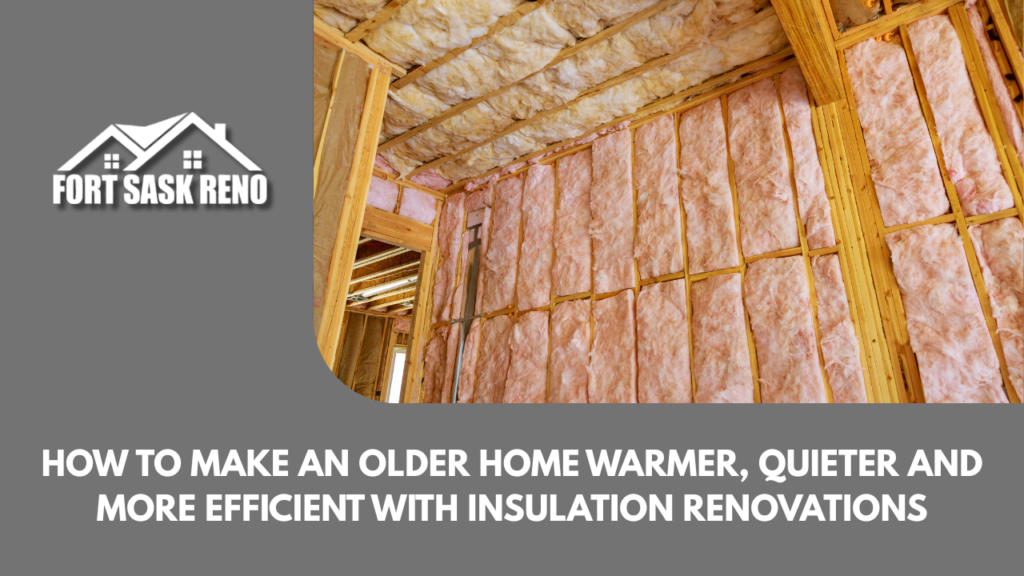
Exterior Insulation Renovations in Fort Saskatchewan: Why Older Homes Need a Different Plan
Older homes often need a different renovation plan than newer builds. In a newer home, the wall system, windows, siding, and ventilation may all have been designed at the same time. In an older home, different parts of the exterior may have been updated over several decades.
That can create problems like:
- Cold exterior walls
- Drafts around windows and doors
- Uneven temperatures from room to room
- Old siding with limited protection underneath
- Air leaks around penetrations and transitions
- Moisture issues caused by poor exterior detailing
- Poor sound control from outside noise
A house is not just a collection of finishes. It is a system. The siding, insulation, windows, doors, capping, soffit, fascia, eavestroughs, and roof edges all work together to control water, air, heat, and moisture.
Natural Resources Canada’s Keeping the Heat In guide explains that home retrofit projects often include insulation and air sealing improvements. It also notes that walls can account for about 20 percent of heat loss in houses, with cracks and penetrations contributing to uncontrolled air leakage. That is why a proper exterior plan matters, especially in a cold climate.
How Exterior Insulation Helps With Warmth, Comfort and Noise
Exterior insulation is added to the outside of the home, usually as part of a larger exterior renovation. Instead of only insulating from inside the wall cavity, it helps create a more continuous layer of thermal protection around the home.
The result can be a house that feels more stable and comfortable.
| Homeowner Problem | How Exterior Insulation Can Help |
| Cold exterior walls | Adds thermal protection outside the wall assembly |
| Drafty rooms | Works well when combined with air sealing and exterior upgrades |
| Uneven temperatures | Helps reduce heat loss through exterior walls |
| Outdoor noise | Adds another layer between the home and the outside |
| Aging siding | Can be addressed during a siding replacement project |
| Higher heating demand | Helps the home hold warmth more effectively |
This is especially valuable in Fort Saskatchewan, where winter comfort matters. A warmer home is not only about the furnace. It is also about how well the house holds heat once the furnace creates it.
Exterior insulation may also help with sound. It will not turn a home into a recording studio, but it can reduce some outside noise by adding density and separation to the exterior wall system. For homes near busier roads, schools, industrial traffic, or high-wind areas, that added quiet can be a meaningful comfort upgrade.
The real benefit is comfort you can feel, not just efficiency you can calculate.
When to Add Exterior Insulation During a Renovation
The best time to consider exterior insulation is when the outside of the home is already being renovated. If siding is coming off, windows are being replaced, or the home exterior is being redesigned, it may be the ideal time to look at what is happening underneath.
Exterior insulation may be worth discussing if you are planning:
- New siding
- Window and door replacement
- Soffit, fascia, and eavestrough upgrades
- Exterior capping
- Roofing edge repairs
- A full exterior redesign
- Repairs after water or storm damage
- A renovation to modernize an older home
This is where planning matters. If you replace siding first and then decide later that you want exterior insulation, you may end up paying twice for overlapping work. It is usually smarter to look at the whole exterior at once and decide what should be improved while the home is already open.
Fort Sask Reno’s website highlights complete exterior renovation services, including siding replacement, painting, roofing repairs, window upgrades, redesigns, and rebuilds. Their exterior insulation service also focuses on rigid exterior insulation, which is commonly considered during larger exterior upgrade projects.
If the siding is already being replaced, it is worth asking whether the wall system underneath should be improved before the new finish goes on.
Exterior Insulation vs Interior Insulation
Homeowners often ask whether it is better to insulate from the outside or the inside. The answer depends on the home, the renovation scope, and what areas are already being opened up.
Exterior insulation is often attractive because it can improve the building envelope without tearing apart finished interior spaces. That means homeowners may be able to improve comfort while avoiding major disruption to drywall, trim, cabinets, paint, and flooring inside the home.
Interior insulation can still make sense in certain projects. For example, if a basement is being renovated, walls may already be open. If a room is being gutted, interior insulation may be practical. But if the goal is to improve the whole home while updating the exterior, outside insulation can be a strong option.
Here is a simple comparison:
| Option | Best For | Things to Consider |
| Exterior insulation | Siding projects, whole exterior renovations, older homes with finished interiors | Works best when planned with siding, windows, doors, and exterior details |
| Interior insulation | Basement renovations, gut renovations, open wall projects | Can require drywall removal and interior refinishing |
| Combined approach | Major renovations or long-term efficiency upgrades | May offer stronger performance when properly designed |
The important thing is not to treat insulation as an isolated product. It should be planned as part of the whole renovation, especially when working on an older home.
What Other Exterior Upgrades Should Be Planned at the Same Time?
Exterior insulation works best when it is coordinated with the rest of the exterior. If the home has old windows, failing siding, tired eavestroughs, or worn-out fascia, insulation alone will not solve every problem.
A strong exterior renovation plan may include:
- Siding replacement
- Exterior insulation
- Window replacement
- Door replacement
- Window and door capping
- Soffit and fascia upgrades
- Eavestrough replacement
- Roofing edge repairs
- Exterior redesign details
- Stone, shakes, trim, or accent features
Fort Sask Reno is a good fit for this type of project because their services are not limited to one small part of the exterior. They work on complete exterior renovations, including siding, soffit, fascia, eavestroughs, windows, doors, capping, roofing renovations, exterior insulation, and redesigns.
That matters because exterior work needs coordination. The windows need to tie into the siding. The capping needs to tie into the openings. The soffit and fascia need to support proper roofline performance. The eavestroughs need to move water away from the home. The insulation needs to be planned with the wall assembly.
A beautiful exterior is great. A beautiful exterior that also helps the home feel warmer, quieter, and more efficient is even better.
Frequently Asked Questions About Exterior Insulation
Is exterior insulation worth it for older homes?
It can be a smart upgrade for older homes, especially if the house feels cold, drafty, or uneven from room to room. It is especially worth discussing when siding or other exterior finishes are already being replaced.
Does exterior insulation make a home quieter?
It can help reduce some outdoor noise because it adds another layer to the wall assembly. The result depends on the home, windows, doors, wall construction, and the type of exterior renovation being completed.
Do I need to replace my siding to add exterior insulation?
In many cases, exterior insulation is most practical when siding is being replaced or removed. That allows the renovation team to access the wall exterior and properly plan the new layers.
Can exterior insulation lower heating bills?
It may help reduce heat loss and improve comfort, especially when combined with air sealing, updated windows, doors, and proper exterior detailing. Actual savings depend on the home and the full renovation scope.
Is exterior insulation better than interior insulation?
Not always. Exterior insulation is often a strong choice during siding and exterior renovation projects. Interior insulation may make more sense when walls are already open inside, such as during basement renovations or full interior remodels.
Will exterior insulation change how my home looks?
It can, depending on the thickness of the insulation and the exterior finish being installed. Details around windows, doors, trim, and transitions need to be planned properly so the finished home looks intentional.
What are the signs my home may need better insulation?
Common signs include cold walls, drafty rooms, high heating demand, uneven temperatures, condensation, ice buildup, noisy rooms, and exterior walls that feel uncomfortable during winter.
Should windows and doors be replaced at the same time?
If windows and doors are old, drafty, or poorly sealed, it may be smart to plan them with the exterior renovation. This helps the entire building envelope work together instead of improving one area while leaving weak points behind.
Who should homeowners call for exterior insulation work?
Homeowners should look for a local renovation contractor with experience in exterior upgrades, siding, windows, doors, and full-home renovation planning. Exterior insulation touches several parts of the home, so coordination matters.
A cold, noisy, inefficient home does not always need a bigger furnace. Sometimes, it needs a better exterior plan. For homeowners thinking about insulation renovations in Fort Saskatchewan, Fort Sask Reno can help look at the whole home, from siding and exterior insulation to windows, doors, soffit, fascia, eavestroughs, and complete exterior upgrades. The right renovation can make an older home feel warmer, quieter, more efficient, and more comfortable for years to come.